
 Home
British Education in Bangkok: A Parent Guide
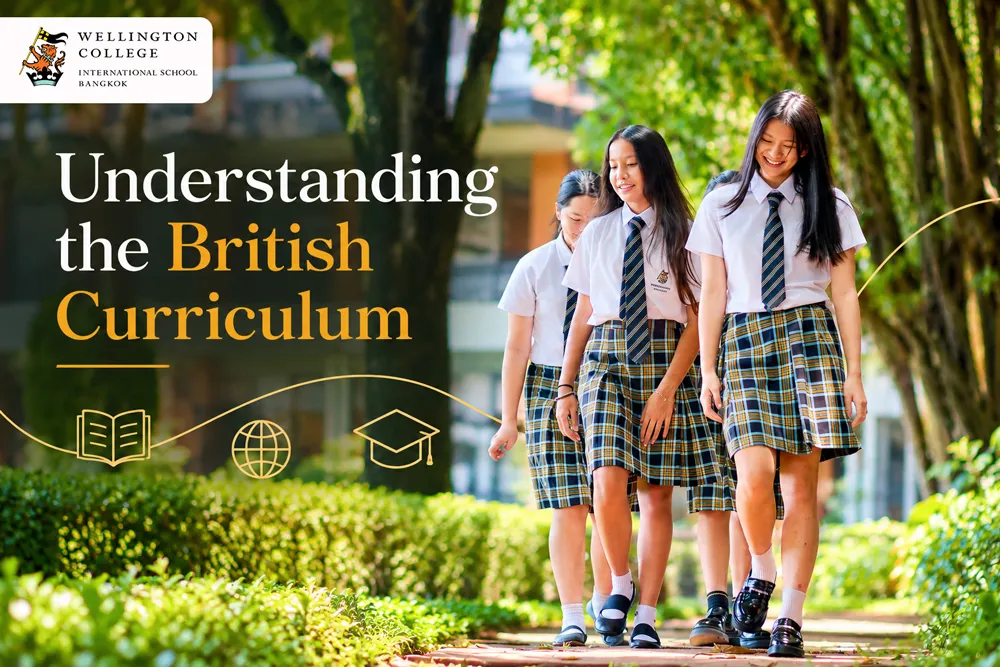

A Guide to British Education in Bangkok
22 October 2026
Bangkok offers families an unusually wide choice of international schools, including many that describe themselves as British or British-curriculum schools. Although these schools may share broadly similar terminology, their educational models are not necessarily identical. The curriculum offered, the qualifications available in Senior School and the balance between academic and wider development can vary considerably.
For parents educated in a different national system, terms such as EYFS, Key Stage 3, IGCSE and Sixth Form may initially feel unfamiliar. Even families who already understand British education may find that international schools adapt the curriculum in different ways.
This guide explains the main stages of a British education, the ages at which students usually progress through them and the decisions families will encounter along the way. It also considers how IGCSEs and A Levels compare with the International Baccalaureate, how British qualifications support university applications and what parents should examine when comparing schools.
WHAT IS A BRITISH INTERNATIONAL SCHOOL?
A British international school normally bases its academic programme on the National Curriculum for England, adapting it where appropriate for its location and international community.
At Wellington College Bangkok, students begin in Pre-Nursery and progress through Early Years, Junior School, Senior School and Sixth Form. The curriculum leads to IGCSE examinations at the end of Year 11 and A Levels in Years 12 and 13.
The curriculum provides a clear educational structure, but a good British education is not defined by subject content alone. It should also develop students’ independence, intellectual curiosity, character and confidence. Academic learning sits alongside sport, music, performing arts, enrichment, leadership and service.
British international schools in Bangkok interpret this balance differently. Some place particular emphasis on examinations, while others offer a broader or more internationally adapted curriculum. There are also differences in subject choice, class size, admissions criteria, pastoral care and the qualifications offered after the age of 16.
Parents should therefore look beyond the word “British” and establish what the student experience is actually like.
BRITISH YEAR GROUPS AND AGES
British schools organise students into year groups rather than grades. The appropriate year group is normally determined by the child’s age at the beginning of the academic year, although admissions teams will also consider previous schooling, curriculum background and individual circumstances.
The usual structure is shown below, with comparisons to the Thai, Chinese, US and Japanese systems:
School section | British year group | Typical age | American equivalent | Thai equivalent | Chinese equivalent | Japanese equivalent |
|---|---|---|---|---|---|---|
| Early Years | Pre-Nursery | 2 to 3 | Pre-K 2 / Toddler | Pre-Kindergarten / เตรียมอนุบาล | Junior Nursery / 小小班 | Nursery / 2-year-old class |
| Early Years | Nursery | 3 to 4 | Pre-K 3 | Kindergarten 1 / อนุบาล 1 | Kindergarten Junior / 小班 | Kindergarten Junior / 年少 |
| Early Years | Reception | 4 to 5 | Pre-K 4 | Kindergarten 2 / อนุบาล 2 | Kindergarten Middle / 中班 | Kindergarten Middle / 年中 |
| Key Stage 1 | Year 1 | 5 to 6 | Kindergarten | Kindergarten 3 / อนุบาล 3 | Kindergarten Senior / 大班 | Kindergarten Senior / 年長 |
| Key Stage 1 | Year 2 | 6 to 7 | Grade 1 | Primary 1 / ประถมศึกษาปีที่ 1 | Primary Grade 1 / 小学一年级 | Elementary Grade 1 / 小学1年 |
| Key Stage 2 | Year 3 | 7 to 8 | Grade 2 | Primary 2 / ประถมศึกษาปีที่ 2 | Primary Grade 2 / 小学二年级 | Elementary Grade 2 / 小学2年 |
| Key Stage 2 | Year 4 | 8 to 9 | Grade 3 | Primary 3 / ประถมศึกษาปีที่ 3 | Primary Grade 3 / 小学三年级 | Elementary Grade 3 / 小学3年 |
| Key Stage 2 | Year 5 | 9 to 10 | Grade 4 | Primary 4 / ประถมศึกษาปีที่ 4 | Primary Grade 4 / 小学四年级 | Elementary Grade 4 / 小学4年 |
| Key Stage 2 | Year 6 | 10 to 11 | Grade 5 | Primary 5 / ประถมศึกษาปีที่ 5 | Primary Grade 5 / 小学五年级 | Elementary Grade 5 / 小学5年 |
| Key Stage 3 | Year 7 | 11 to 12 | Grade 6 | Primary 6 / ประถมศึกษาปีที่ 6 | Primary Grade 6 / 小学六年级 | Elementary Grade 6 / 小学6年 |
| Key Stage 3 | Year 8 | 12 to 13 | Grade 7 | Secondary 1 / มัธยมศึกษาปีที่ 1 | Junior Secondary Grade 1 / 初中一年级 | Junior High Grade 1 / 中学1年 |
| Key Stage 3 | Year 9 | 13 to 14 | Grade 8 | Secondary 2 / มัธยมศึกษาปีที่ 2 | Junior Secondary Grade 2 / 初中二年级 | Junior High Grade 2 / 中学2年 |
| Key Stage 4 | Year 10 | 14 to 15 | Grade 9 | Secondary 3 / มัธยมศึกษาปีที่ 3 | Junior Secondary Grade 3 / 初中三年级 | Junior High Grade 3 / 中学3年 |
| Key Stage 4 | Year 11 | 15 to 16 | Grade 10 | Secondary 4 / มัธยมศึกษาปีที่ 4 | Senior Secondary Grade 1 / 高中一年级 | Senior High Grade 1 / 高校1年 |
| Sixth Form | Year 12 | 16 to 17 | Grade 11 | Secondary 5 / มัธยมศึกษาปีที่ 5 | Senior Secondary Grade 2 / 高中二年级 | Senior High Grade 2 / 高校2年 |
| Sixth Form | Year 13 | 17 to 18 | Grade 12 | Secondary 6 / มัธยมศึกษาปีที่ 6 | Senior Secondary Grade 3 / 高中三年级 |
These ages are a general guide. Schools may apply different cut-off dates, and children transferring from another curriculum may not always move directly into the year group that appears to match their previous grade, especially if they use a different academic calendar, such as Japan or Australia, where academic years tend to run from January to December, instead of August to July.
A school should consider the child’s academic history, English proficiency, social development and the point reached in any examination course. This becomes particularly important from Year 9 onwards because moving between curricula can affect subject choices and qualification pathways.
Early Years Foundation Stage
The Early Years Foundation Stage, usually known as EYFS, supports children from birth to the end of Reception. In an international school, this generally covers the years immediately before Year 1.
The EYFS framework recognises that young children learn through exploration, purposeful play, communication and carefully planned experiences. Play-based learning does not mean that children are simply left to occupy themselves. Effective Early Years teaching is deliberate, structured and closely observed.
A water activity, for example, might introduce vocabulary such as full, empty, warm, cold, floating and sinking. Children may practise pouring, compare different containers and begin to understand volume. A painting activity can develop colour recognition and creativity while also strengthening the hand control needed for later writing.
The framework covers three prime areas:
- Communication and language
- Physical development
- Personal, social and emotional development
These are supported by four specific areas:
- Literacy
- Mathematics
- Understanding the world
- Expressive arts and design
At Wellington, the Early Years environment is designed to help children develop confidence, language, independence and positive relationships. Teachers plan learning around each child’s stage of development while preparing them gradually for the greater structure of Junior School.
When comparing Early Years settings, parents should look at the quality of adult interaction, the purpose behind activities and how well teachers understand individual children. Attractive classrooms and playgrounds matter, but the quality of teaching remains more important than the appearance of the environment.
Key Stage 1: Years 1 and 2
Key Stage 1 marks the beginning of the more formal primary curriculum, although effective teaching still includes practical exploration, discussion and play-informed approaches.
Students develop the foundations of reading, writing and mathematics while studying science and a wider range of subjects. They begin to work with increasing concentration and learn how to organise themselves within a classroom community.
For international students, these years can also be an important period for language development. Parents should ask how the school identifies children who need additional English support and whether that support allows students to continue participating meaningfully in classroom learning.
Progress during Key Stage 1 should not be judged only by test results. A strong school will also consider communication, confidence, curiosity, social development and the child’s growing ability to work independently.
Key Stage 2: Years 3 to 6
During Key Stage 2, students consolidate their core skills and begin to engage with subjects in greater depth. English and mathematics remain central, but students should also experience a broad curriculum that may include science, humanities, computing, design technology, art, music, drama, physical education and additional languages. Some subjects may increasingly be taught by specialist teachers.
At Wellington, this period is not treated simply as preparation for Senior School. Students are encouraged to develop their own interests while gaining the knowledge and learning habits they will need later.
By Year 6, children should be increasingly confident in reading complex texts, communicating ideas, applying mathematics and taking responsibility for their work. The transition into Year 7 should then represent a natural continuation of learning rather than an abrupt change of educational culture.
Parents comparing Junior Schools should look at the breadth of the curriculum, the quality of specialist provision and the way progress is monitored. They should also consider whether the school stretches academically confident students while providing appropriate support for those who need more time.
Key Stage 3: Years 7 to 9
Key Stage 3 is the first part of Senior School and provides the academic foundation for later IGCSE choices. Students normally study a broad range of subjects, including English, mathematics, sciences, humanities, languages, creative subjects, technology and physical education. Lessons become more specialised, and students usually move between different teachers and learning environments.
These years are important because students begin to identify their strengths and interests before selecting examination subjects. A child who has had meaningful exposure to art, computing, drama, music, design technology and different humanities subjects is better placed to make informed decisions.
At Wellington, students experience a broad Key Stage 3 curriculum alongside enrichment, sport, leadership opportunities and the House system. The intention is to build academic confidence without narrowing education too early.
Parents should examine whether a school maintains genuine breadth during these years. They should also ask how teachers prepare students for subject selection and whether choices are guided by ability, interest and future aspirations rather than timetable convenience alone.
IGCSEs: Years 10 and 11
The International General Certificate of Secondary Education, or IGCSE, is an internationally recognised qualification normally completed at the end of Year 11.
It is broadly comparable with the GCSE qualification taken in England, although IGCSE courses were designed with international schools and globally mobile students in mind. Different examination boards offer IGCSE specifications, so course content and assessment arrangements can vary
Students usually study compulsory core subjects alongside several options. English, mathematics and science commonly form part of the core programme, while options may include humanities, languages, creative subjects, business, computing, physical education and design technology.
Subject choices are normally made during Year 9, before courses begin in Year 10. Schools should provide guidance to students and families so that the combination remains broad enough to support future study.
At this stage, students do not need to have decided on a career. However, they should understand that particular Sixth Form or university pathways may require certain subjects. A student considering engineering, for example, will need a strong foundation in mathematics and science, while a future medical applicant should investigate the science requirements of different universities.
At Wellington, the IGCSE programme combines academic rigour with individual guidance. In 2026, 80% of all IGCSE grades were awarded at A*-A or grades 9-7, with 57% at A* or grades 9-8. These results provide useful evidence of academic quality, but examination statistics should always be read carefully when comparing schools.
Parents should consider:
- The number of students in the examination cohort
- Whether results cover all subjects and candidates
- The proportion of grades at each level
- Subject-level performance
- How selective the school is
- The progress students make from their starting points
- Whether results are published consistently each year
A single headline percentage does not explain the full academic picture. Transparent schools should provide the year, qualification, cohort and basis of calculation.
Sixth Form and A Levels: Years 12 and 13
Sixth Form covers the final two years of school. In a British curriculum, students usually study A Levels.
A Levels allow students to specialise. Most students select three or four subjects and study them in considerable depth over two years. Choices are normally made during Year 11, supported by discussions with teachers, academic leaders and university guidance staff. This specialisation suits students who have begun to identify their strongest subjects and likely university interests. A student planning to study engineering might choose Mathematics, Further Mathematics and Physics, while someone interested in law could select from several academically rigorous combinations involving humanities, languages or English.
There is no single ideal set of A Levels. The right combination depends on the student’s ability, interests and intended university options. Schools should provide individual guidance rather than simply directing students towards subjects in which they are most likely to gain high grades.
Wellington’s first A Level cohort graduated in 2026 with a 100% pass rate, including 73% of grades at A*-B. Students progressed to universities across the UK, the United States, Canada, Australia, Asia and Thailand.
A strong Sixth Form should offer more than classroom teaching. Students also need structured university guidance, opportunities for leadership and support as they adjust to the independence expected at university.
IGCSES, A LEVELS AND THE IB: WHAT IS THE DIFFERENCE?
IGCSEs, A Levels and the International Baccalaureate are sometimes discussed as competing alternatives, but they represent different stages or models:
IGCSEs
IGCSEs are subject-based qualifications usually completed at the age of 16. Students study a relatively broad programme and receive a separate grade for each subject. IGCSEs can lead into A Levels, the IB Diploma or other post-16 programmes. They are not themselves a final university-entry qualification.
A Levels
A Levels are completed during Years 12 and 13. Students study a smaller number of subjects in greater depth. They are well suited to students who know where their strongest academic interests lie and want to specialise before university. Assessment is subject-specific, and universities may require particular subjects and grades for entry to certain courses.
The International Baccalaureate Diploma
The IB Diploma is also a two-year qualification for students aged 16 to 18. Students usually study six subjects across different academic areas, with some taken at Higher Level and others at Standard Level.
The programme also includes the Extended Essay, Theory of Knowledge and Creativity, Activity and Service. It retains greater breadth than A Levels and requires students to continue studying across several disciplines.
Bangkok includes British schools that lead to A Levels, others that offer the IB Diploma and some that provide more than one pathway. Neither qualification is inherently better for every student. The important question is which structure suits the individual. A student who wants to specialise may prefer A Levels, while one who enjoys maintaining breadth across languages, sciences and humanities may be well suited to the IB.
Parents should also consider the quality of delivery. An excellent A Level programme is preferable to a weak IB programme, and the reverse is equally true.
HOW BRITISH QUALIFICATIONS SUPPORT UNIVERSITY APPLICATIONS
IGCSEs and A Levels are recognised by universities around the world. British universities commonly make offers based on three A Level grades. Certain courses may require specific subjects, such as Mathematics for engineering or Chemistry for medicine.
Universities in the United States and Canada consider A Levels within a broader application that may also include school transcripts, activities, essays and recommendations. Strong A Level performance can demonstrate considerable subject knowledge and academic preparation.
Universities in Australia, Europe, Thailand and across Asia also publish entry requirements for students holding British qualifications. Requirements vary by institution and course, which makes informed university guidance increasingly important.
University preparation should begin before students submit applications. Schools should help them understand:
- Subject requirements
- Entry grades
- Application systems and deadlines
- Personal statements or application essays
- Admissions tests
- Interviews
- Portfolios and auditions
- Scholarship opportunities
- Visa and financial considerations
At Wellington, university guidance works alongside academic and pastoral support. Students are encouraged to identify courses and destinations that genuinely suit them rather than focusing only on institutional prestige.
When comparing schools, parents should ask about confirmed destinations as well as offers. They should also look beyond a short list of famous universities and consider whether each student receives appropriate individual guidance.
WHAT SHOULD PARENTS COMPARE BETWEEN BRITISH SCHOOLS?
The most suitable school will depend on the child, but several areas deserve careful examination.
Curriculum pathway
Confirm what the school means by “British curriculum”. Does it follow the English National Curriculum throughout? Does it offer IGCSEs, A Levels, the IB or another qualification? Are those pathways fully established?
Academic results
Look for complete, dated and clearly explained information. Consider cohort size and subject performance rather than relying on one promotional statistic.
Subject choice
Ask which IGCSE and Sixth Form subjects actually run. A long published list is only useful if subjects are regularly available and timetable combinations allow students to take them.
Teaching quality
Facilities can support education, but teachers determine its quality. Ask about staff experience, professional development, turnover and how the school maintains consistent expectations.
University guidance
Consider when guidance begins, how individual it is and whether the team has experience across the countries your child may consider.
Pastoral care
Students learn best when they feel secure, known and supported. Parents should understand the tutor system, safeguarding arrangements, wellbeing provision and communication with families.
Language and learning support
Ask how the school assesses English proficiency and supports students entering from other language backgrounds. Families requiring additional learning support should establish what expertise and resources are available.
Breadth beyond examinations
Sport, music, drama, technology, outdoor education, service and enrichment should be part of the educational experience rather than decorative additions to a prospectus.
School culture
Visit during a normal school day. Observe how students and adults speak to one another, whether classrooms feel purposeful and whether the school’s stated values are visible in everyday interactions.
Location and daily travel
Bangkok traffic can have a significant effect on family life. Consider realistic journey times, school transport and how frequently students may need to remain on campus for activities.
Admissions and fees
Understand the assessment process, entry criteria and complete cost of attendance. Registration fees, deposits, meals, transport, trips, examinations and activities may not all be included within tuition fees.
FINDING THE RIGHT FIT
There is no single British school that will be right for every family. The strongest decision will come from understanding the educational pathway and then considering how well a school’s academic expectations, culture and opportunities suit the individual child.
Published information is a useful starting point, but visiting the school remains essential. Families should meet the people responsible for teaching and supporting their child, explore the learning environment and ask direct questions about results, subject choices and pastoral care.
Wellington College Bangkok offers a continuous British education for students aged 2 to 18, from the Early Years Foundation Stage through to IGCSEs and A Levels.
Families are warmly invited to experience the College through an Open Morning or an individual visit, where they can explore the campus, meet members of the academic and Admissions teams and discuss the most appropriate pathway for their child. For more information, you can complete an Enquiry, email admissions at admissions@wellingtoncollege.ac.th or call us on +66 (0) 2087 8888.